
The cultivation of public space, when approached with intent and reverence, becomes more than urbanism—it gestures toward something transcendent. A truly civic space, one that invites beauty, deliberation, and shared ritual, echoes a deeper yearning for spiritual integration.
Years ago, wandering the remnants of the Ancient Agora of Athens, I found myself imagining not just the physical life of the space, but the spirit that once dominated it. The cracked marble and quiet colonnades seem now to whisper of a time when human flourishing was not a private endeavour, but a shared civic ritual. Here, Socrates walked. Not metaphorically, but actually—his feet kicking up the Athenian dust as he instructed his young disciples under the Stoa of Attalos. He was not merely debating abstractions, but sharpening souls through dialogue. Nearby, vendors sold amphorae and olives under the same sun that warmed the temples of Hephaestus and Apollo, blending the sacred, the commercial, and the political in one pulsating civic core.
The Agora of Athens was no single-function marketplace—it was a microcosm of life itself. A place where philosophy, trade, ritual, and politics were not compartmentalised, but converged in an almost liturgical choreography. Its spatial configuration enabled this convergence: the open air of the Pnyx, where policies were debated in daylight; the altars and small shrines scattered through the market; the shaded porticoes offering space for quiet reflection or engaged disputation. This was not accidental; it was architectural philosophy made stone. One might call it a theology of space.
Herodotus writes of the Agora as a stage of “freedom of speech,” while Xenophon recalls Socrates drawing crowds by simply being present. The Agora, in its physical design and cultural function, created conditions where truth-seeking, community, and beauty were inseparable. It did not impose belief—it invited participation.
It is difficult not to contrast this ancient coherence with the fragmentation of our contemporary public lives. Today, many of our so-called “public spaces” are designed less for communion than for throughput. Instead of places to linger, we move through corridors of glass and steel optimised for transactions. Instead of shared civic rituals, we encounter curated digital timelines that mirror back our biases. The soul, when denied the physical theatre of shared civic life, begins to shrink—slowly, imperceptibly, but inevitably. This is not merely an aesthetic or urban design dilemma—it is, as Plutarch might say, a symptom of spiritual recession.
The Agora as a Mirror of the Soul
To the ancient Greeks, civic participation was not a burden but a form of soulcraft. The philosopher and the artisan were both engaged in telos-driven acts—striving toward excellence (aretē). The physical beauty of the Agora—its colonnades, its balance of sacred and civic spaces—was not ornamental. It was essential. It shaped the citizen’s sense of belonging, responsibility, and even transcendence.
There is a story, told in later Roman accounts, of an Athenian potter who would pause his work when a public debate caught his ear, abandoning his stall to join a dialogue on ethics. Another tale—perhaps apocryphal, but telling—is of Diogenes, the Cynic, living in a barrel on the edge of the Agora, using his presence as both protest and invitation. These anecdotes may seem quaint today, but they illustrate an essential point: the space allowed for the soul’s engagement with the city. It allowed for presence.
Modern Athens, paradoxically, offers a visual lamentation of this loss. The once-venerated Agora now sits largely as an archaeological park, visited by tourists but no longer central to civic life. Surrounding neighbourhoods bear the scars of civic disengagement. Graffiti—much of it not the expressive street art of intentional dissent but the scrawled signatures of apathy—covers walls and statues. A 2020 study by the Athens Partnership found that over 60% of central monuments were subject to regular vandalism, many of them located in former civic nodes. This visual noise often masks a deeper silence: the absence of common purpose, of communal reverence. The broken windows, quite literally, remain unrepaired.
Yet examples such as Brunello Cucinelli’s “Week of Guardianship” in Perugia offer a counter-practice. In this initiative, citizens are invited to care for their public spaces not out of obligation, but out of a spirit of shared stewardship. These are not grand gestures. They are humble affirmations of care, repeated until they become a culture. Until beauty becomes habit.
Toward a Modern Civic Re-Enchantment
Not all is lost. In cities across the world, there are stirring examples of public space being reimagined—not just as amenities but as cultural sanctuaries. These efforts, often driven by citizens, artists, and visionary philanthropists, hint at a deeper longing for the integrated life.

In New York, the High Line transformed abandoned railways into suspended gardens, encouraging not only foot traffic but reflection. The blending of art, greenery, and architectural openness evokes something akin to sacred procession—a slow, communal meditation in motion.

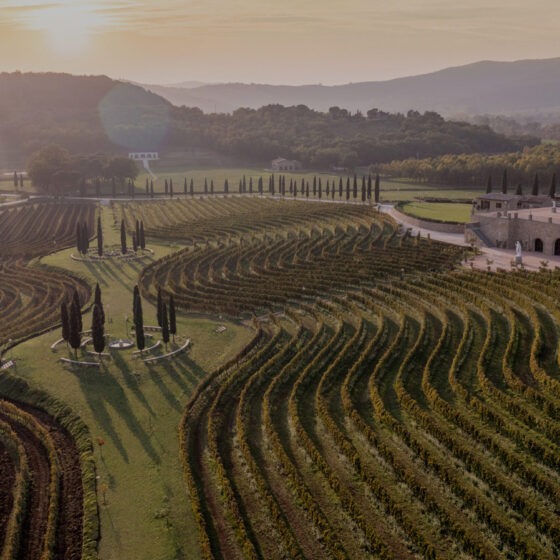
In Solomeo, Italy, Brunello Cucinelli’s vision of humanistic capitalism takes form not only in beautifully crafted garments, but in an entire built environment: a theatre, a library, public gardens—all forged from the belief that beauty fosters dignity. Cucinelli’s restoration of Solomeo is not nostalgic. It is aspirational—a modern expression of an ancient truth: that public space can refine the soul.
Central to Solomeo’s revival is the “Forum of the Arts,” a cultural and spiritual nucleus for the village that includes the Aurelian Theatre, the Universal Library, and the School of Contemporary High Craftsmanship and Arts. These spaces are not just educational or performative venues; they are temples of civic meaning. The use of enduring materials, classical architectural harmony, and generous green space restores a dialogue between body, soul, and environment. Cucinelli’s attention to the “pleasant periphery”—transforming even the outskirts of the village into zones of aesthetic and spiritual care—reveals a holistic philosophy: that no space is too marginal to deserve beauty.
We may never recreate the religious unity or philosophical consensus of ancient Athens, but we can still learn from its spatial and spiritual wisdom. The Agora was not great because it imposed meaning; it was great because it created the conditions in which meaning could emerge—through dialogue, ritual, trade, and proximity. It was a theatre of the human condition. To revive the spirit of the Agora is not to reconstruct it in marble. It is to commit, again, to the public life of the soul. To build spaces that ask more of us than consumption. To linger. To contemplate. To be in common. For those inclined to seek the sacred in the civic, these spaces offer an invitation—not a prescription. A quiet call to live more beautifully, together.
Design Principles for a Modern Agora
What, then, are the design principles that might guide a contemporary revival of the Agora spirit? What can transform public space from being functional to formative?
- Aesthetics and Civicism: Inspired by Aristotle’s emphasis on harmony, public spaces should delight the eye and elevate the soul. Beauty becomes a catalyst for higher thought and civic connection.
- Enduring Materials and Classical Proportions: Natural elements such as stone, wood, and greenery convey permanence and human scale. These materials age with grace and tether us to nature and tradition. This can be witnessed in an ever increasing interest in biophilic design, salutogenics, and neuroaesthetic design.
- Spaces for Deliberation, Not Just Transit: Public squares must invite loitering. Varied seating, shaded nooks, and multi-use structures encourage dialogue, contemplation, and civic intimacy.
- Versatility and Community Use: The best spaces serve multiple purposes—markets, concerts, quiet afternoons. They become true commons, responding to the rhythms of daily life.
- Integration of Art and Philosophy: Public art that provokes thought, inscriptions that echo wisdom, and architecture that slows the pace of life are all means of engaging the mind.
- Radical Accessibility: A modern agora must welcome all bodies. The design of paths, lifts, and signage must reflect the dignity of universal belonging.