“Good governance is about nothing more or less than creating happiness. It really is that simple.”
When Sheikh Mohammed bin Rashid Al Maktoum made this observation, many dismissed it as just a modern leadership aphorism. Yet had the citizens of Athens, Delphi, or Chaeronea heard those words, they might have nodded in full agreement. For much of human history, politics was not understood primarily as a mechanism for managing economies, regulating markets, or administering services. It was understood as the art of creating the conditions in which human beings could flourish. Somewhere along the way, modern politics forgot this vocation. Today we debate taxation, regulation, growth, and public spending. These matters are important. Yet they are all secondary to a more fundamental question:
What is government ultimately for?
If the answer is not human flourishing, then what is it?
And if human flourishing is the aim, then our political imagination may need to expand far beyond economics and administration. It may need to recover the forgotten arts of formation, beauty, citizenship, and civic ritual.
What is striking is that we already know a great deal about the conditions under which human beings flourish. Across cultures and centuries, certain patterns emerge with remarkable consistency. People flourish when they are formed rather than merely informed. When they feel connected to a place larger than themselves. When they inhabit beautiful environments. When they participate in meaningful communities. When they possess a sense of purpose, belonging, and civic responsibility.
Yet modern politics rarely concerns itself with these questions. Instead, we tend to assume that flourishing will emerge automatically if economic growth is sufficient and public services are adequately funded. Wealth and administration undoubtedly matter, but they are means rather than ends. A society can be prosperous yet fragmented. Safe yet lonely. Efficient yet spiritually exhausted. If we accept that the purpose of government is not merely to manage society but to help create the conditions for human flourishing, then we must ask a second question:
What conditions make flourishing possible?
The ancients would have answered this question differently than we do today. They understood that the good life is cultivated through institutions, habits, places, relationships, and shared civic practices. Flourishing is not simply a private achievement; it is supported, or undermined, by the culture that surrounds us.
Drawing on both personal experience and ancient wisdom, I believe there are four neglected foundations of civic flourishing that deserve renewed attention:
A New Paideia
The Lost Art of Human Formation
The Greeks used the word paideia to describe the formation of the whole person. Education was not merely the transfer of information. It was the cultivation of character. A modern paideia would complement academic learning with civic responsibility, practical philosophy, public speaking, ethical reasoning, local history, mentorship, and service to the community.
One of the great paradoxes of modern education is that we ask young people to make some of the most consequential decisions of their lives before they have had the opportunity to understand themselves. At eighteen years old, students are expected to select a degree, commit to years of study, and begin shaping a professional future. Yet many have never been encouraged to explore their character, temperament, strengths, values, or sense of purpose. After more than three decades spent training, coaching, and developing adults in high-performance professional environments, I have observed a recurring pattern. Many people are intelligent, capable, and highly qualified, yet find themselves in careers they drifted into rather than consciously chose. They followed the path that appeared sensible, available, or expected. Years later, they possess expertise but little enthusiasm, achievement but limited fulfilment. The problem is not a lack of education. It is a lack of orientation.
A modern paideia would seek to address this imbalance by placing formation before specialisation. Beginning in childhood, education would focus on the cultivation of virtues that appear across cultures and civilisations: honesty, courage, self-discipline, responsibility, service, wisdom, and justice. During adolescence, increasing emphasis would be placed on self-knowledge through mentorship, reflective practice, civic participation, apprenticeships, and exposure to a broad range of vocations. Only then would young people be asked to make significant educational and professional choices.
The goal would not be to direct them toward particular careers, but to help them discover where their abilities, interests, and character naturally converge. The question would no longer be, “What job will this young person have?” but rather, “Who is this young person becoming?” For it is only through self-knowledge that vocation becomes more than an economic necessity; it becomes an expression of purpose.
A National Commitment to Civic Beauty
The city as teacher
Beauty is often treated as a luxury, though its power extends far beyond appearances. The spaces we inhabit shape our habits and behaviour. A beautiful city teaches dignity. A neglected city teaches indifference. A politics of human flourishing would therefore invest not only in infrastructure but in beauty: restored town centres, public squares, parks, libraries, schools, architecture, and public art.
The modern tendency is to view beauty as subjective and therefore outside the responsibility of government. Yet few would deny the difference between a graceful square and a neglected one, a tree-lined boulevard and a litter-strewn street, a well-maintained civic building and a decaying public space. The built environment exerts a subtle but powerful influence on those who inhabit it. When public spaces are cared for, citizens are more likely to care for them in return. When beauty is neglected, neglect often becomes contagious. Beauty is not merely decorative. It is educational. It teaches standards, reinforces civic pride, and reminds people that they are part of a community that values itself.
A national commitment to civic beauty need not begin with grand architectural projects. It could begin with something much simpler: a commitment to radical cleanliness, the restoration of town centres, the protection of historic buildings, investment in parks and tree canopies, beautiful schools and libraries, the removal of visual clutter, thoughtful lighting, quality materials, and a renewed commitment to public spaces designed for people rather than vehicles. Every city and town should possess places where citizens naturally wish to gather, walk, reflect, and encounter one another. The objective is not aesthetic perfection, nor the creation of museum cities frozen in time. It is the cultivation of environments that elevate daily life and communicate a simple message: this place matters, and therefore the people who live here matter as well.
The Greeks understood that the city itself was a teacher. Every street, square, monument, and public building communicated values. In this sense, a city is a curriculum. The question modern societies must ask is simple: what lessons are our towns and cities teaching today? Are they cultivating pride, stewardship, beauty, and belonging, or are they quietly teaching disorder, anonymity, and indifference? A politics concerned with human flourishing cannot remain neutral on this question, for the environments we create ultimately help shape the citizens we become.
A Year of Civic Service
From Consumer to Steward
Throughout my professional life, I have observed something that modern politics rarely acknowledges: people tend to feel better when they contribute. Whether through volunteering, mentoring, supporting local initiatives, or helping neighbours in times of need, acts of service often create a sense of purpose, belonging, and self-respect that cannot be purchased or legislated into existence. My mother often expressed this idea in simple terms. She believed that every person has a responsibility to give back to the community in which they live and work; that participation in civic life is not merely a choice but part of a moral exchange.
The older I have become, the more convinced I am that she was right. We inherit roads we did not build, institutions we did not create, freedoms we did not secure, and communities we did not establish. The question is not only what we receive from society, but what we contribute in return. Citizenship, after all, cannot be sustained by rights alone. It must also be practised.
For generations, military service fulfilled part of this function. Beyond its defensive purpose, it provided a shared experience through which young people learned service to something greater than themselves. There may well be reasons to revisit aspects of this tradition in the future. Yet a modern society should recognise that not every citizen is called to military service, nor should civic contribution be limited to a single path. A more inclusive solution would be the introduction of a period of national civic service, in which every young adult contributes to the wellbeing of the polis in a manner aligned with their abilities and interests. Military service could remain one option among many, but not the only one.
Such a programme could include supporting local mayoral offices and community projects, restoring historic sites and public spaces, maintaining beaches, parks, and walking trails, removing litter and illegal tagging, assisting elderly residents, supporting libraries and cultural institutions, participating in environmental conservation projects, mentoring younger students, or helping organise local festivals and civic events. The objective would not simply be to complete tasks. It would be to cultivate stewardship. To teach young people that a city is not something we consume but something we inherit, care for, and ultimately pass on. The greatest value of civic service may ultimately lie not in the tasks completed, but in the citizens it helps to form and the communities they are called to serve.
The Restoration of Civic Ritual
The Shared Stories That Hold Us Together
Modern societies possess procedures but often lack meaningful rituals. We continue to observe public holidays, commemorative dates, and civic ceremonies, yet many of the practices that once gave these occasions their meaning have faded from public memory. For some, religious festivals such as Christmas, Easter, or All Saints’ Day remain deeply significant. For many others, however, these days have become little more than welcome interruptions to the working week. The holiday remains, but the ritual has disappeared. The same challenge faces many civic commemorations. On 8 May and 11 November, we gather to honour the sacrifice of the millions of men and women who gave their lives in defence of liberty and the future of Europe. Yet one cannot help but wonder how many young people feel genuinely connected to these ceremonies. In time, there is a risk that remembrance becomes the preserve of a diminishing number of elderly participants standing in public squares, carrying memories that future generations no longer feel invited to inherit.
The ancients understood something that modern societies often overlook: rituals were not merely expressions of faith. They were acts of collective memory. In the Greek world, religious festivals served a civic function as much as a spiritual one. They reminded citizens who they were, where they belonged, and what responsibilities they shared. Rituals created continuity between generations. They connected people to place, to history, and to one another. A healthy society therefore requires more than efficient institutions. It requires meaningful opportunities for people to gather around shared experiences and shared symbols.
The question is not whether modern societies need rituals. The question is what kind of rituals might serve us today. Municipalities should look beyond ideology and rediscover the rhythms that have united human communities for millennia: the changing seasons, the agricultural cycle, the natural world, and the passage of time itself. Solstice and equinox celebrations, seasonal festivals, civic harvest events, community meals, public arts festivals, days of local service, citizen honours, heritage walks, and intergenerational storytelling events can all help reconnect people to the places they inhabit. Unlike many contemporary celebrations, these gatherings need not revolve around excessive consumption, alcohol, or spectacle. Their purpose is not entertainment but participation.
I have experienced this personally. Standing on the Mediterranean shore at sunrise on the Summer Solstice, watching the first light emerge above the horizon, I have often reflected upon the countless generations who depended upon the rhythms of the natural world long before modern calendars and digital clocks. Such moments remind us that we are part of a much longer story than our own. This is the deeper purpose of ritual. It anchors us in time. It cultivates gratitude. It creates memory. Most importantly, it reminds us that citizenship is not merely a legal status but a shared inheritance. In an age marked by fragmentation and loneliness, the restoration of civic ritual may be one of the most powerful tools available for rebuilding a sense of belonging.
A Call to Action
Modern societies and the governments that serve them have become remarkably skilled at measuring productivity, administering services, and managing complexity. Yet many citizens feel increasingly disconnected from their communities, from one another, and from any larger sense of shared purpose. We speak frequently of growth, but less often of belonging. We discuss rights, but rarely duties. We invest in infrastructure, but often neglect the invisible civic architecture that allows communities to flourish: character, beauty, service, memory, and meaning.
The encouraging reality is that many of the solutions lie closer to home than we might imagine. While national governments undoubtedly have an important role to play, some of the most meaningful acts of civic leadership occur at the municipal level. Every mayor, from Boston to Bordeaux, possesses the capacity to shape the daily experience of citizenship. They can choose whether public spaces inspire pride or indifference. They can determine whether town centres become places of encounter or simply corridors of consumption. They can foster civic participation, local traditions, beauty, and stewardship.
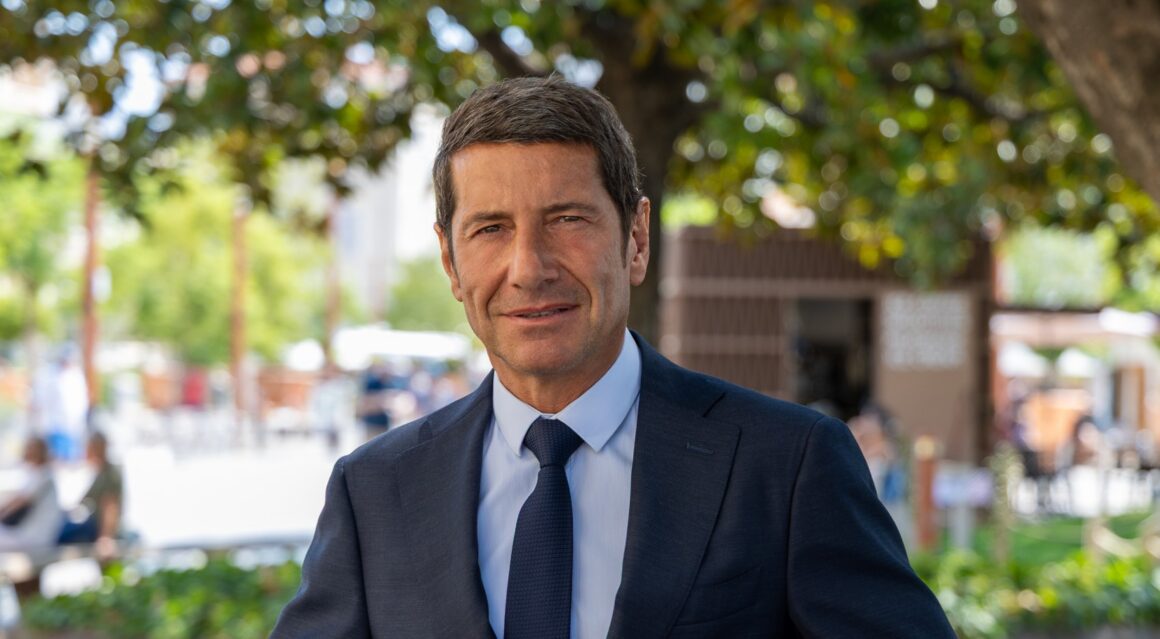
When I look at figures such as David Lisnard, Mayor of Cannes since 2014, I cannot help but wonder what Plutarch would have thought. Here is a civic leader who has spent more than a decade engaged not merely in administration, but in the continual improvement of his city. Under his leadership, Cannes has invested heavily in beautification projects, the renewal of the legendary Croisette promenade, environmental innovation, public infrastructure, and the quality of everyday life. The city has pursued ambitious projects to modernise public spaces while simultaneously investing in environmental technologies and the protection of its Mediterranean environment.
What I find particularly compelling is not simply the projects themselves, but the philosophy they imply. Lisnard is known for regularly walking through the city, observing it firsthand, speaking with residents, and experiencing the realities of daily life rather than relying solely on reports and statistics. There is something profoundly Plutarchan about this. The best civic leaders understand that a city cannot be governed exclusively from behind a desk. It must be seen, felt, and experienced.
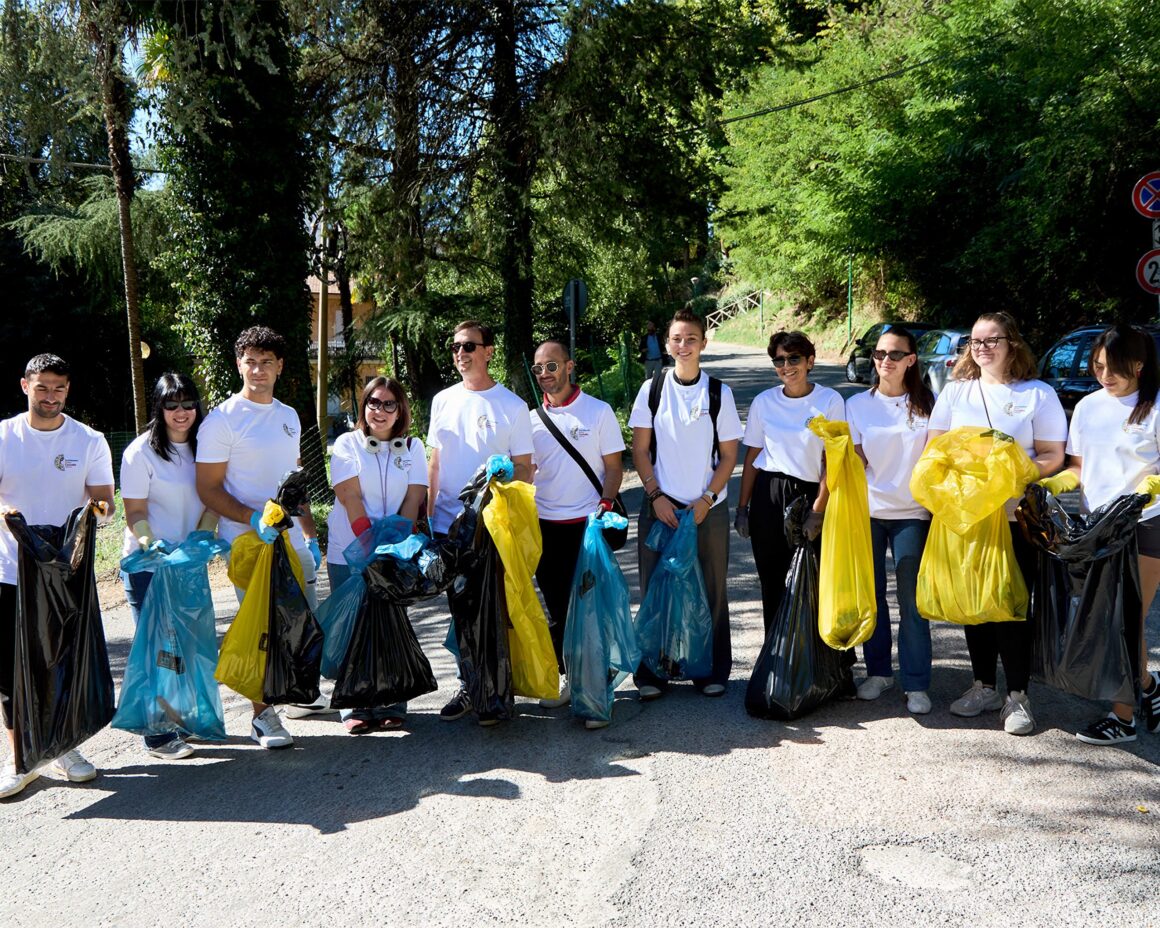
We can find similar examples beyond politics. In 2025, Brunello Cucinelli partnered with the Municipality of Perugia to launch the “Week of Guardianship,” a civic initiative encouraging citizens to actively participate in the care, preservation, and beautification of their city. Schools, families, businesses, universities, and neighbourhood associations were invited to contribute through acts of stewardship ranging from cleaning and restoration to the care of public spaces and local heritage. The programme rests upon a simple but powerful idea: that every citizen is a temporary guardian of beauty and has a responsibility to leave the city better than they found it. Such initiatives remind us that flourishing communities are not created by government alone, but through a partnership between institutions and engaged citizens.
Human flourishing does not emerge automatically. It must be cultivated. It requires leaders willing to think beyond electoral cycles and economic indicators. It requires citizens willing to contribute rather than merely consume. Most importantly, it requires communities willing to ask a question that modern politics too often neglects:
What kind of people are we helping to form?
The future of our societies will not be determined solely by national policies or global institutions. It will be determined by the quality of our local communities, the standards we choose to uphold, and the degree to which we accept responsibility for the places we call home.
The call to action, therefore, is not only for presidents, prime ministers, or parliaments. It is for mayors, councillors, educators, business leaders, community organisers, and citizens. The task before us is not simply to build wealthier cities, but better ones; not simply more efficient communities, but more beautiful, more virtuous, and more deeply human places to live. That is a challenge worthy of our time. And it is one that begins not in the halls of power, but in the streets, squares, schools, and neighbourhoods of the polis itself.